
Memories of SPARC – Issue 7
24-07-20

Quote From This Week
Some quotes I liked from SPARC so far:
“my AI timeline is in the next 35 minutes”
“riding into the sunset on a wave of fields which seem fun but jobless”
“things that are universally fun, like philosophy”
Memories, from SPARC
“I’m certain that many of the connections made here will be valuable in the future, and as of now, an assistant director role with SPARC is aligned with my short term interests.”
This was a statement I wrote in a journal entry shortly after my first SPARC in 2018. The first half of that ended up being quite accurate. The second part, true enough at the time, certainly didn’t contain an expectation that I’d still be around at this point.
This week, I’ll be starting my 7th SPARC (and 12th(?) “rat-camp” overall). Due to the hustle and bustle, this week’s issue will be put together more hastily.
Over the years SPARC has become a rather special place to me. I think I originally imagined it to be a temporary situation where I leapfrog to whatever I would end up doing next. Instead, I ended up becoming woven into the fabric of the institution more and more, and in some senses, grew up within and along with the institution and the community.
It was pretty clear off the bat that SPARC was a fairly uncommon education program. It selects exceptional students that are generally above most bars a comparable institution would look for (both in terms of raw achievement/abilities, but also character).1 Relatedly, its staff, former or present, can also be intimidatingly accomplished for a high school summer program. With both of these as a factor, it’s then only a bit less shocking, that some SPARC alumni have gone on to do some extraordinary work in the world.
It’s somewhat because of this setup, I’d originally imagined that I would likely, through SPARC, move on to some other things. Instead, mysteriously, SPARC’s gravity caught me. I made friends with people I connected so well with that I didn’t think possible at the time. I went to locales and events my younger self would be flabbergasted about. I fell in love with new subjects that I never thought I would be passionate about.
Since SPARC has impacted me deeply, coupled with the fact that SPARC (and its related camps) are held in different places in the world, I end up forming strong memories situated in strange corners of the world.
I care a good deal about the preservation of my ability to “retrieve” my memories. My life has many segments that don’t overlap with each other, so I have a lot of memories that are somewhat unique in that I lack people to help me verify/corroborate them. This means that “whether I can recall” becomes the decider for whether aspects of my life/history are still “alive” in a sense. This is also why I’ve always been quite interested in how memories work. I’ve been reading about this recently for example.2
What factors determine what information can be retrieved from memory? One critical factor is the type of hints, or cues, in the environment. You may hear a song on the radio that suddenly evokes memories of an earlier time in your life, even if you were not trying to remember it when the song came on. Nevertheless, the song is closely associated with that time, so it brings the experience to mind.
In SPARC’s case, because it tends to run on college campuses, my memories are also cued by the physical locations where the camps are held. This year, SPARC is held at Cal State East Bay, a location we have returned to a couple of times now, and one which my only association with is SPARC. Naturally, there exist abundant environmental cues for my memories here.
While on a morning walk, I noticed numerous memorable moments being evoked over the years. I decided for this issue, I would share some of the memories that came up for me on this walk. To help anchor these stories, I also took a few photos of campus. Each shot contains the environmental cues that reliably bring up these memories for me.
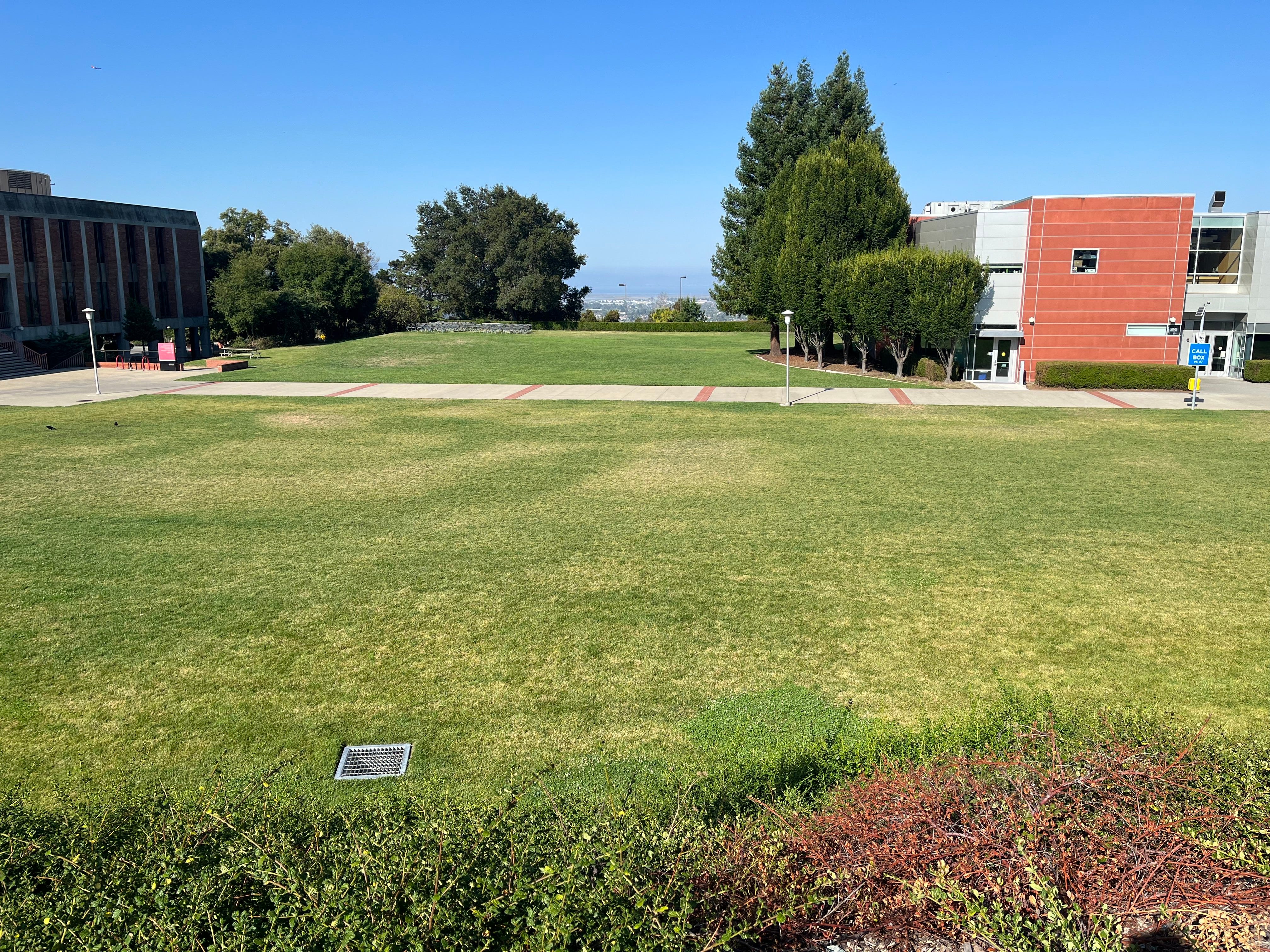
A relatively random field that ended up with some sharp memories.
Running:
This small field was the first time where I was taught to think about how to optimize for speed in running. That is, how the motions of each part of the body work together to produce maximum forward momentum. Apparently, up until that activity in SPARC, I have only thought about “improving form” for some physical task, but somehow never “optimized for form” for that physical task. It ended up being surprisingly formative. Not only did it inform a good deal of how I subsequently thought about things like running or sports, but more so it became one of the core memories for how “optimizing” can be fun, effective, and a good way to connect with other people.
Living More Consciously:
One of my earliest “1-on-1s” where I felt like I had a big impact on a student happened in this field. At that time, I had been thinking a lot about how dialogue worked. I had often thought of how if we think about conversations like a decision tree, every exchange containing multiple choice options of responses, it ends up creating a script that seems more predictable and less conscious. One would want to think about options outside of the default scripts if one wants to have a conversation that has new endings. At the time, I was still quite new to SPARC, and it wasn’t clear to me if I could “help” the students in the same way I see other staff doing. How the student responded was one of my earliest memories of thinking that perhaps what I’m thinking about may be relevant to students too.
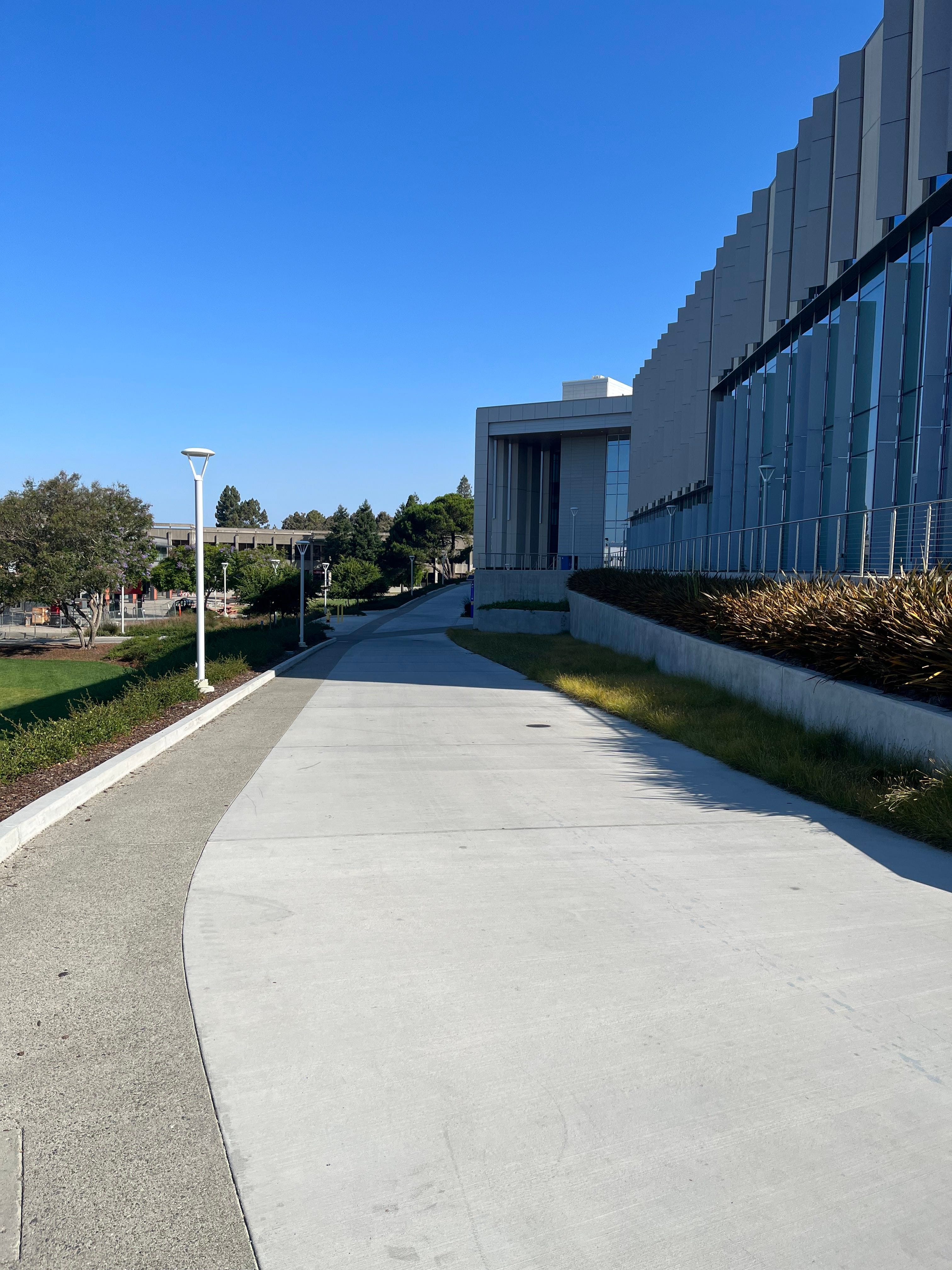
This path is associated with many conversations I had on walks with staff and students.
What If This Was My Last SPARC?
It was towards the end of a SPARC. A returning student talked with me thinking that this is probably their last year at SPARC and that they have no immediate plans to return. They reported feeling a bit conflicted about feeling like they should have gotten more out of their last year of SPARC. I hope they felt like they got a good send-off into their future endeavors. The world is far larger than SPARC.
Learning About Diverse Backgrounds
We have worked hard at SPARC to sensibly increase diversity by selecting for students who comes from under-privileged backgrounds. We hope this would increase both their opportunities and add perspectives for our default demographics. On a walk with a student, I learned that in their country, even universities don’t necessarily have good plumbing infrastructure. One of the first things students do upon waking up is to leave their dorm and collect water from elsewhere on campus. This story continues to stay with me and influence how I think about institutional resources.
Life Paths Diverging
I have developed some fairly close friendships with a handful of alumni over the years. During one particular alumni night, when alumni would visit campus, I walked with someone who I was quite close with for the first few years after they did SPARC. During this walk, I could feel that our life path was diverging – what previously spawned conversation is now more stale somehow. I notice myself thinking during the chat“After this walk, we likely won’t talk for perhaps a year or two”. I find this to be a fairly cyclical phenomenon in longer relationships. Looking forward to when our paths/interests might converge again in the coming years.
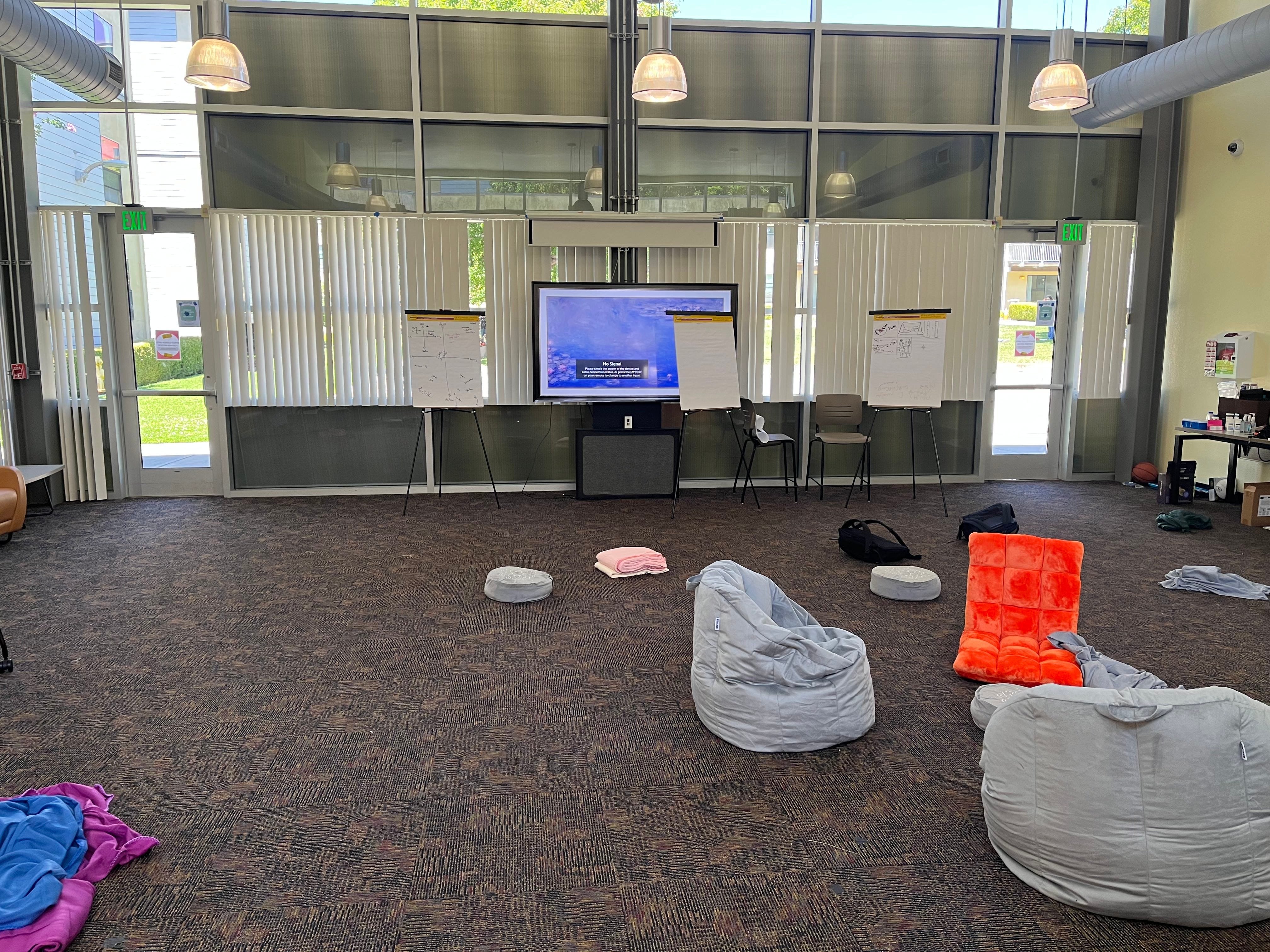
This room is typically the main common space and naturally has quite a few memories too.
Shoulds vs. Wants
It seems almost a silly exercise in hindsight, but in one of my earliest years at SPARC, an instructor decided to draw a simple chart on a piece of paper. On one side is the heading: “Shoulds”, and the other “Wants”. They then asked students (including me) to populate examples of each side. I remember feeling surprised that I never explicitly separated these to see what came up. Unsurprisingly, it wasn’t hard to populate the “Shoulds” column. Relatedly, it sure wasn’t easy to come up with examples for “Wants”. I thought a great deal about this distinction after that camp.
People in Different Contexts
I was hanging out with an IMO Gold Medalist one year, and among other silly things we talked about, we discovered that they really liked a pair of elephant pants I had. After a few days of negotiation, we decided that they would buy it from me for $5 (a bit weird of a trade in hindsight). Now I never did much contest math personally. Naturally, I didn’t have much of a sense of the “hierarchy” of the contest math world at first. Similar to watching high-level sports without a reference class, the notion of “I suppose that’s pretty incredible” is fairly abstract. Now imagine how I feel a week after SPARC, seeing their photo on Facebook, dressed in formal wear with their team, receiving a medal. Did I just sell some old pair of pants to some minor math celebrity??
Another year is well underway. I’m curious what kind of new memories would be encoded into the relationships and environments this time.
Apparently, My Humor
As a general thematic reflection on memories, I think one dimension that makes me like doing this section is that the memes/jokes tend to unify disparate parts that I have trouble connecting.
For example, a combination I’m surprised I haven’t seen before:
I think I was a fairly decent student when I was in school (A student, decent extracurriculars), but younger David pales in comparison to the average SPARC admit. When I worked on SPARC admissions, it gave me a great deal of insights as to why I was quite often rejected from a number of similar programs when I was a student.
For example, there’s a clear delineation between those who know me by my Chinese name and those who know me by David. I’ve lost contact with almost all of my friends from when I was in China, so the identity associated with my Chinese name is fragile in a sense. I was particularly crushed when my grandfather passed away a few years ago because one of the few people important to me and knows me (specifically the part of me that identifies by my Chinese name) is gone and fragments of the Chinese David also died as the memories “disappear”. My sense is that this is a somewhat natural course of the human dying process, but usually associated with much older folks, in a sort of “Most of those I know and know me have passed. It’s about time for me to go too.” sense.